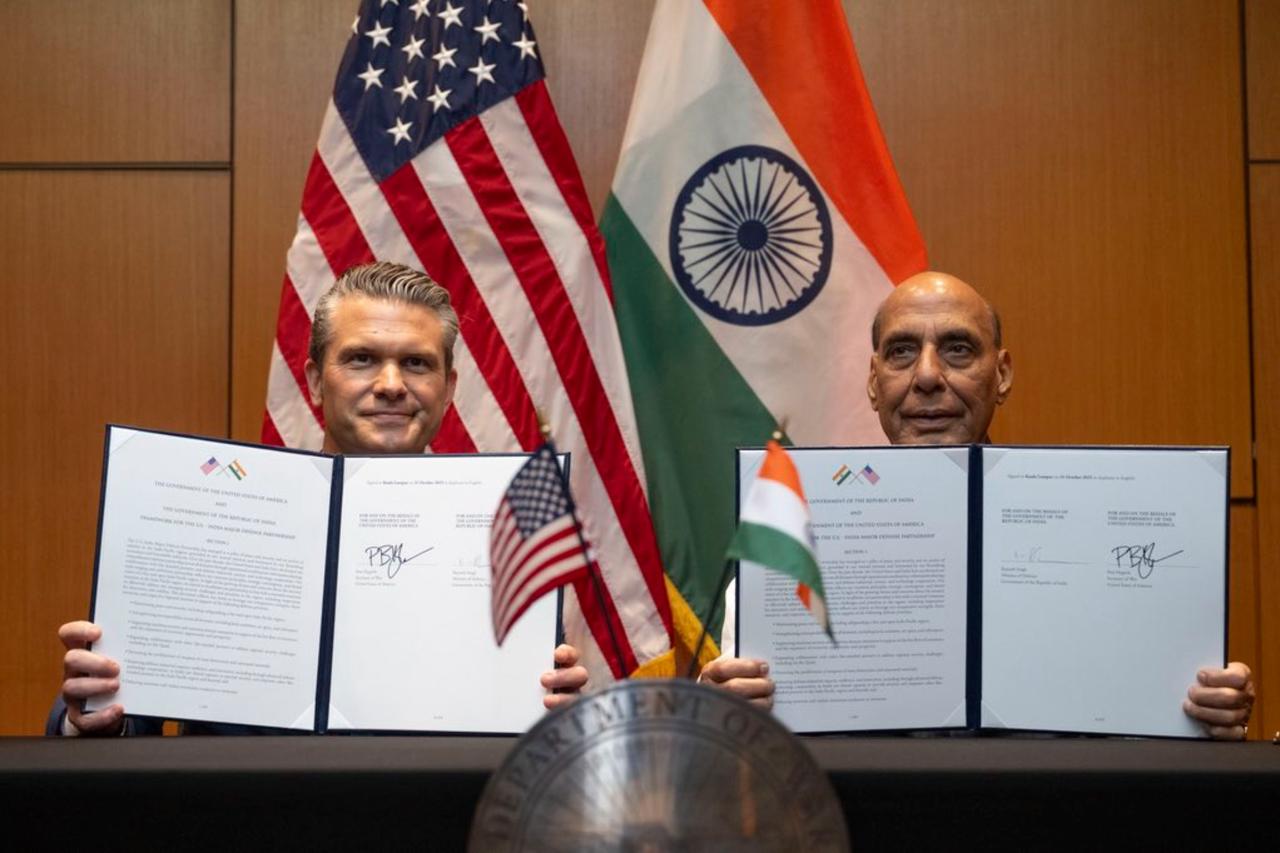
The United States and India signed a 10-year defense framework on Friday following a meeting between U.S. Defense Secretary Pete Hegseth and Indian Defense Minister Rajnath Singh in Kuala Lumpur on the sidelines of the ASEAN Defense Ministers’ Meeting. Hegseth said the framework would strengthen bilateral cooperation across multiple fronts, including coordination, intelligence sharing, and defense technology.
Posting on X, he described the pact as "a cornerstone for regional stability and deterrence," adding that defense ties between Washington and New Delhi "have never been stronger." Singh, in a separate statement on X, called the meeting "fruitful" and said the newly signed "Framework for the U.S.-India Major Defense Partnership" would provide long-term policy direction to the entire spectrum of defense relations between the two countries. He said the agreement reflects a growing "strategic convergence" and will usher in a "new era" in the bilateral partnership.
Both defense leaders are attending the two-day ASEAN Defense Ministers’ Meeting in Kuala Lumpur, where regional security issues—particularly concerning the South China Sea—remain at the forefront. The summit began Friday in Kuala Lumpur, bringing together ministers from ASEAN member states alongside counterparts from the US, China and India.
The United States and India signed a 10-year defense framework on Friday following a meeting between U.S. Defense Secretary Pete Hegseth and Indian Defense Minister Rajnath Singh in Kuala Lumpur on the sidelines of the ASEAN Defense Ministers’ Meeting. Hegseth said the framework would strengthen bilateral cooperation across multiple fronts, including coordination, intelligence sharing, and defense technology.
Posting on X, he described the pact as "a cornerstone for regional stability and deterrence," adding that defense ties between Washington and New Delhi "have never been stronger." Singh, in a separate statement on X, called the meeting "fruitful" and said the newly signed "Framework for the U.S.-India Major Defense Partnership" would provide long-term policy direction to the entire spectrum of defense relations between the two countries. He said the agreement reflects a growing "strategic convergence" and will usher in a "new era" in the bilateral partnership.
Both defense leaders are attending the two-day ASEAN Defense Ministers’ Meeting in Kuala Lumpur, where regional security issues—particularly concerning the South China Sea—remain at the forefront. The summit began Friday in Kuala Lumpur, bringing together ministers from ASEAN member states alongside counterparts from the US, China and India.
İLGİLİ HABERLERRELATED
Smoke reported over Riyadh after alleged Houthi strike on Aramco refinery Smoke reported over Riyadh after alleged Houthi strike on Aramco refinery
Von der Leyen says Albania's EU membership goal 'in sight' Von der Leyen says Albania's EU membership goal 'in sight'

Russia reportedly withholds data on deported Ukrainian children, blocks returns
AB liderleri zirvede enerji güvenliğini görüşecek EU leaders to discuss energy security at summit
ÇOK OKUNANLARTRENDING
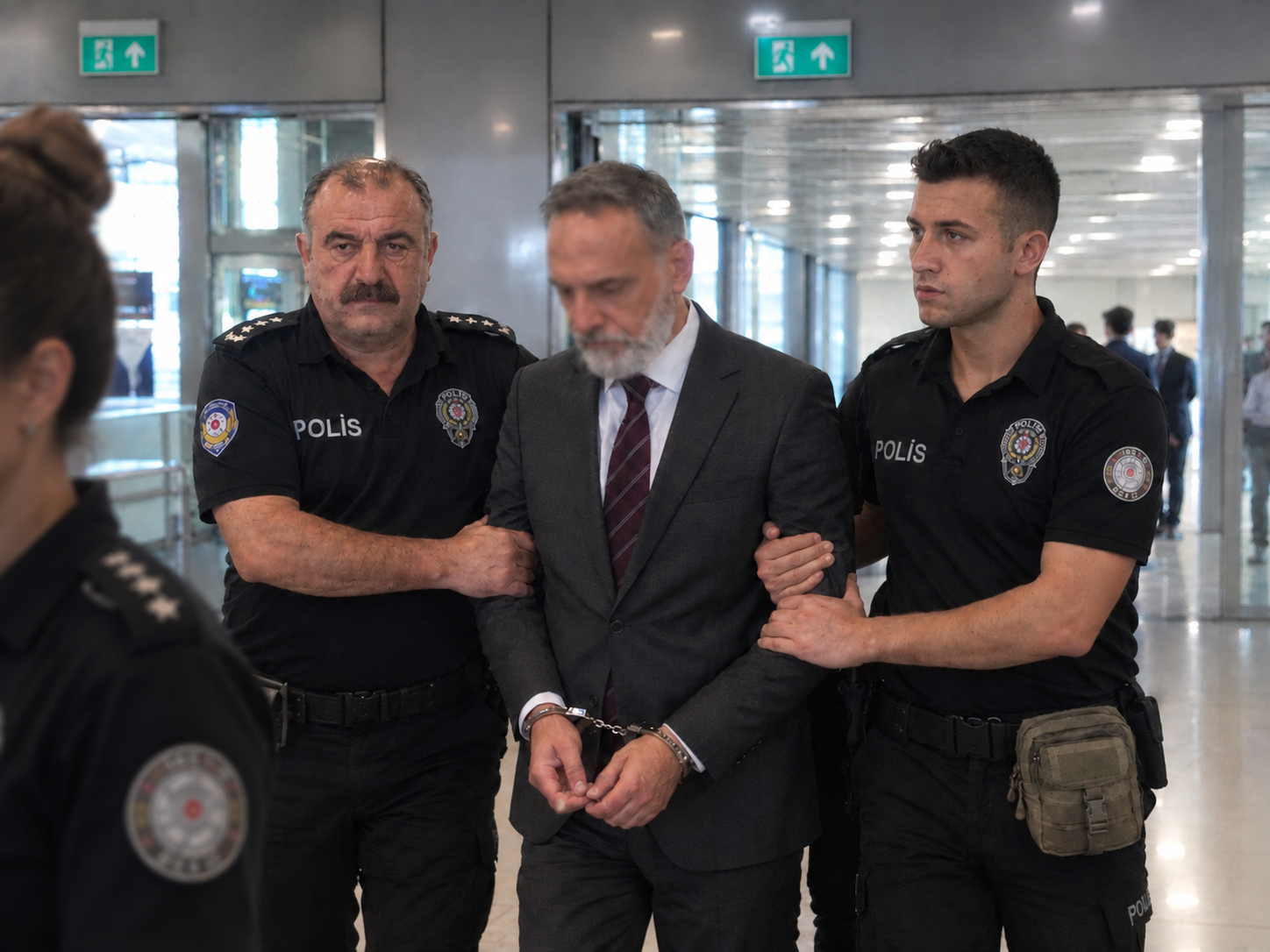
Altı Kutu, Reçete Yok: Charlotte, Kuzey Karolina, Amerika Birleşik Devletleri'ne Giden Adam İstanbul Havalimanı'nda Lyrica Yüzünden Tutuklandı Six Packs, No Prescription: Man Bound for Charlotte, North Carolina, United States Arrested at Istanbul Airport Over Lyrica
Russia reportedly withholds data on deported Ukrainian children, blocks returns