
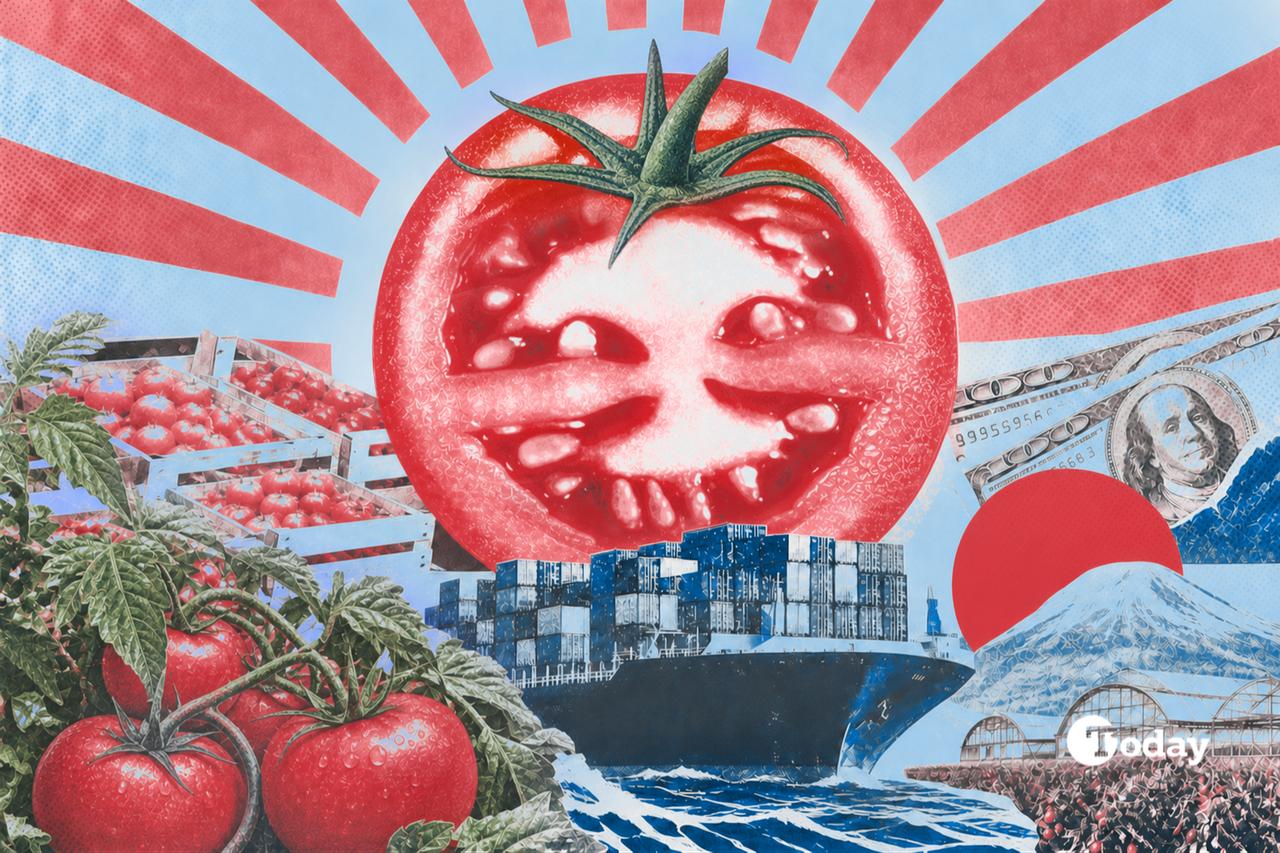
The end of summer is upon us, which means the sun is packing its bags, the tourists are reluctantly locating their trousers, and sensible people everywhere are confronting the melancholy truth that the tomato is about to become something else.
You know something else. It is round. It is red. It can withstand international freight, refrigeration, careless handling, and possibly small-arms fire. It is called a tomato chiefly because calling it packing material would alarm the grocer.
But before surrendering to winter, consider Türkiye, where summer makes its last magnificent stand in a tomato—and where the Russians have been buying the things by the shipload.
Forget Turkish drones. Forget Miles&Smiles upgrades on Turkish Airlines. Forget even the industrial export of suspiciously convincing hairlines from Istanbul transplant clinics. Türkiye's most consequential contribution to international commerce is the tomato: cheaper than a drone, tastier than an airline ticket, and, unlike a new head of hair, entirely capable of crossing the Black Sea without attracting attention.
You may scoff. That’s exactly what they want you to do.
Doubters, take note.
President Recep Tayyip Erdogan addressed the United Nations General Assembly this week and never mentioned the tomato. National security. You don’t stand before 193 countries and disclose the location of your strategic reserves—particularly when the Russians are in the room.
This is important. We are not discussing six crates of heirlooms being smuggled into Moscow restaurants by sentimental gourmands.
Before relations between Ankara and Moscow went spectacularly bad in 2015, Türkiye was shipping Russia roughly 366,000 tons of tomatoes a year, worth $439 million. That was about 43% of Russia’s tomato imports and enough to account for an astonishing 11% of all the tomatoes Russians ate.
That’s one tomato in nine.
Follow the trucks. Follow the ships. Follow the money. When one country supplies one out of every nine tomatoes eaten in another country, we are no longer talking about salad. We have entered the murkier territory where appetite meets commerce, commerce meets politics, and a ripe red fruit begins behaving suspiciously like a strategic commodity.
And Türkiye has tomatoes to spare.
It grows them on an imperial scale: 13.3 million metric tons in 2023, nearly 20% in Antalya alone. Bursa produced another 1.53 million tons, followed by Manisa, Konya, and Izmir. Tomatoes account for roughly 41% of Türkiye's vegetable production. This is no garden hobby. It is practically a branch of government.
Türkiye eats accordingly. Annual consumption has been about 106 kilograms per person—an amount suggesting that the average Turk does not so much eat tomatoes as maintain a personal tactical reserve of them.
The explanation begins with geography. Along the Mediterranean, especially around Antalya, tomatoes luxuriate beneath a ferocious sun. Greenhouses extend the season.
On the Aegean and Marmara plains come field tomatoes destined for tables, jars, sauces, and salca, that dense crimson concentrate without which a Turkish kitchen would begin to look suspiciously Scandinavian.
Then there is Ayas, west of Ankara, where the tomato has achieved something most vegetables can only dream about: European legal recognition. The Ayas tomato has protected designation of origin status. It is large, thin-skinned, fleshy, pinkish-red, irregularly ridged, and unapologetically imperfect.
It’s the agricultural equivalent of an elderly pasha who has no intention of buying a new suit. Its official European specification even describes a slightly salty, lemony aroma.
This is the point. A Turkish tomato tastes like somebody forgot to engineer the taste out of it.
Chef and culinary historian Musa Dagdeviren, proprietor of Istanbul’s celebrated Ciya, once chose tomato, chilli, and eggplant as the three flavors representing Türkiye's southern and western coasts, observing that he knew hardly anyone there who didn’t adore them. Discussing traditional seasonal cooking elsewhere, he offered the more devastating judgment that in winter there simply “isn’t good enough tomato.”
The Russians discovered what that meant the hard way.
After Türkiye shot down a Russian military aircraft near the Syrian border in 2015, Moscow imposed sanctions, and Turkish tomatoes were banished. Here was geopolitics at its most magnificently absurd: two ancient powers, armies deployed, ambassadors glowering, diplomats issuing grave statements—and somewhere in Antalya a farmer standing beside several tons of perfectly innocent salad.
For a while, the tomato had ceased being lunch and become foreign policy.
But governments possess ideology while consumers possess appetites, and appetite is frequently the more durable institution. Eventually, the tomatoes came back.
By 2024, Türkiye was again shipping Russia 49,975.9 tons of fresh tomatoes worth $43.69 million. Worldwide, Türkiye exported 492,120 tons worth $425.18 million that year.
Call them dry stats, perhaps, but people want the tomato again tomorrow.
Governments can quarrel over Syria, NATO, sanctions, pipelines, aircraft, and several centuries of mutual suspicion. The tomato, meanwhile, maintains a parallel foreign policy.
Perhaps that is because the case for the Turkish tomato is ultimately less statistical than sensual. Cut open a ripe field tomato in September. Salt it. Wait 30 seconds. The flesh begins surrendering juice onto the plate. There is sweetness, acid, perfume, mineral sharpness, and that peculiar green smell from the stem that supermarkets have spent half a century trying to eradicate.
It tastes of heat, dirt, and summer refusing to leave.
But summer is leaving anyway. Soon enough there will be rain against the windows and those indestructible winter tomatoes sitting beneath fluorescent lights, red as fire engines and approximately as flavorful.
So eat the Turkish tomatoes while you can.
The Russians have already learned what happens when you lose them.
You know something else. It is round. It is red. It can withstand international freight, refrigeration, careless handling, and possibly small-arms fire. It is called a tomato chiefly because calling it packing material would alarm the grocer.
But before surrendering to winter, consider Türkiye, where summer makes its last magnificent stand in a tomato—and where the Russians have been buying the things by the shipload.
Forget Turkish drones. Forget Miles&Smiles upgrades on Turkish Airlines. Forget even the industrial export of suspiciously convincing hairlines from Istanbul transplant clinics. Türkiye's most consequential contribution to international commerce is the tomato: cheaper than a drone, tastier than an airline ticket, and, unlike a new head of hair, entirely capable of crossing the Black Sea without attracting attention.
You may scoff. That’s exactly what they want you to do.
Doubters, take note.
Not missiles, perhaps marinara
President Recep Tayyip Erdogan addressed the United Nations General Assembly this week and never mentioned the tomato. National security. You don’t stand before 193 countries and disclose the location of your strategic reserves—particularly when the Russians are in the room.
This is important. We are not discussing six crates of heirlooms being smuggled into Moscow restaurants by sentimental gourmands.
Before relations between Ankara and Moscow went spectacularly bad in 2015, Türkiye was shipping Russia roughly 366,000 tons of tomatoes a year, worth $439 million. That was about 43% of Russia’s tomato imports and enough to account for an astonishing 11% of all the tomatoes Russians ate.
That’s one tomato in nine.
Follow the trucks. Follow the ships. Follow the money. When one country supplies one out of every nine tomatoes eaten in another country, we are no longer talking about salad. We have entered the murkier territory where appetite meets commerce, commerce meets politics, and a ripe red fruit begins behaving suspiciously like a strategic commodity.
And Türkiye has tomatoes to spare.
It grows them on an imperial scale: 13.3 million metric tons in 2023, nearly 20% in Antalya alone. Bursa produced another 1.53 million tons, followed by Manisa, Konya, and Izmir. Tomatoes account for roughly 41% of Türkiye's vegetable production. This is no garden hobby. It is practically a branch of government.
Türkiye eats accordingly. Annual consumption has been about 106 kilograms per person—an amount suggesting that the average Turk does not so much eat tomatoes as maintain a personal tactical reserve of them.
The explanation begins with geography. Along the Mediterranean, especially around Antalya, tomatoes luxuriate beneath a ferocious sun. Greenhouses extend the season.
On the Aegean and Marmara plains come field tomatoes destined for tables, jars, sauces, and salca, that dense crimson concentrate without which a Turkish kitchen would begin to look suspiciously Scandinavian.
Then there is Ayas, west of Ankara, where the tomato has achieved something most vegetables can only dream about: European legal recognition. The Ayas tomato has protected designation of origin status. It is large, thin-skinned, fleshy, pinkish-red, irregularly ridged, and unapologetically imperfect.
It’s the agricultural equivalent of an elderly pasha who has no intention of buying a new suit. Its official European specification even describes a slightly salty, lemony aroma.
This is the point. A Turkish tomato tastes like somebody forgot to engineer the taste out of it.
Chef and culinary historian Musa Dagdeviren, proprietor of Istanbul’s celebrated Ciya, once chose tomato, chilli, and eggplant as the three flavors representing Türkiye's southern and western coasts, observing that he knew hardly anyone there who didn’t adore them. Discussing traditional seasonal cooking elsewhere, he offered the more devastating judgment that in winter there simply “isn’t good enough tomato.”
The Russians discovered what that meant the hard way.
The savage domates diplomacy
After Türkiye shot down a Russian military aircraft near the Syrian border in 2015, Moscow imposed sanctions, and Turkish tomatoes were banished. Here was geopolitics at its most magnificently absurd: two ancient powers, armies deployed, ambassadors glowering, diplomats issuing grave statements—and somewhere in Antalya a farmer standing beside several tons of perfectly innocent salad.
For a while, the tomato had ceased being lunch and become foreign policy.
But governments possess ideology while consumers possess appetites, and appetite is frequently the more durable institution. Eventually, the tomatoes came back.
By 2024, Türkiye was again shipping Russia 49,975.9 tons of fresh tomatoes worth $43.69 million. Worldwide, Türkiye exported 492,120 tons worth $425.18 million that year.
Call them dry stats, perhaps, but people want the tomato again tomorrow.
Governments can quarrel over Syria, NATO, sanctions, pipelines, aircraft, and several centuries of mutual suspicion. The tomato, meanwhile, maintains a parallel foreign policy.
Perhaps that is because the case for the Turkish tomato is ultimately less statistical than sensual. Cut open a ripe field tomato in September. Salt it. Wait 30 seconds. The flesh begins surrendering juice onto the plate. There is sweetness, acid, perfume, mineral sharpness, and that peculiar green smell from the stem that supermarkets have spent half a century trying to eradicate.
It tastes of heat, dirt, and summer refusing to leave.
But summer is leaving anyway. Soon enough there will be rain against the windows and those indestructible winter tomatoes sitting beneath fluorescent lights, red as fire engines and approximately as flavorful.
So eat the Turkish tomatoes while you can.
The Russians have already learned what happens when you lose them.
İLGİLİ HABERLERRELATED
Türkiye, Saudi Arabia, Pakistan explore ways to assist Riyadh under Mecca pact

Altı Kutu, Reçete Yok: Charlotte, Kuzey Karolina, Amerika Birleşik Devletleri'ne Giden Adam İstanbul Havalimanı'nda Lyrica Yüzünden Tutuklandı Six Packs, No Prescription: Man Bound for Charlotte, North Carolina, United States Arrested at Istanbul Airport Over Lyrica
Meclis yeni yasama yılına başlıyor, ekonomi paketi masada Parliament opens new term, economy package on the table

HubX becomes Türkiye's 8th unicorn after $75M overseas investment
ÇOK OKUNANLARTRENDING
Altı Kutu, Reçete Yok: Charlotte, Kuzey Karolina, Amerika Birleşik Devletleri'ne Giden Adam İstanbul Havalimanı'nda Lyrica Yüzünden Tutuklandı Six Packs, No Prescription: Man Bound for Charlotte, North Carolina, United States Arrested at Istanbul Airport Over Lyrica
Türkiye ticaretin geleceğini şekillendirmeye yardımcı oluyor: NIQ CEO'su Türkiye is helping shape future of commerce: NIQ CEO